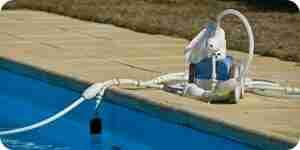
A residential pool is a joy about 98 percent of the time—but we sometimes forget about the other 2 percent. That 2 percent (otherwise known as maintenance) is vital to your enjoyment of the pool, and pool pumps play no small role. Without your pool pump, water would no longer circulate; instead, it would stagnate in filth! Learn about your pool pump: read the information provided by the manufacturer, consult the following tips for proper use and energy efficiency, and check the links provided for troubleshooting advice.
- Be sure to follow your manufacturer's installation instructions carefully when installing your pool pump. There will be detailed directions as to where the pool pump should be positioned in your pool, and you should not deviate from those directions. For example, if your pool pump was intended for submerged use, make sure that you position it underwater in a place where the pump housing can fill entirely with water.
- Pool pumps vary in design, but most tend to be self-priming centrifugal pool pumps, which means that the pump housing has to fill with water in order to generate a vacuum. When the motor is turned on and powers the pump impeller, this vacuum enables the pool pump to pull water from the pool, thereby circulating the pool water.
- To maximize energy efficiency and reduce the cost of using your pool pump, be sure that you have the smallest pool pump necessary for the size of your pool. A 0.75 horsepower pool pump should either satisfy or exceed the needs of most backyard pools, but pool pump manufacturers have pool pump charts that illustrate how their pumps should match up with different sized pools. By consulting the chart available from your particular manufacturer, either online or in the product literature, you can determine whether your pool pump is the smallest effective pump you could use.
- People tend to run their pool pumps more than necessary. While it's better to have a clean pool than a dirty one, you might also want to save some money on that electric bill. Your pool pump should be powerful enough to compel all of your pool's water to flow through it in a period of about 8-10 hours. But if your pool isn't used very much and is free of substantial falling debris, you could run your pool pump for less than eight hours in a day and the pool would likely stay clean. To determine what kind of pool pump you need to keep your pool's water circulating, divide the volume of the pool (in gallons) by the number of hours you desire for full water turnover time, and then divide once more by 60. Your result will be the flow rate you need in a pool pump. The flow rate of a pool pump will be measured in gallons per minute.
- Run your pool pump while you add chemical treatments to ensure that the treatment is mixed and distributed throughout the pool. You don't have to run the pool pump every day just to get rid of small amounts of debris, though. Use a net or other device to remove it and trust that the chemicals are keeping the water otherwise clean.
- You can buy a pool pump timer that can be set to run in desired increments and on a schedule that optimizes your use of the pool pump.
If you have questions or concerns about your pool pump model and can't seem to find answers, it never hurts to contact the manufacturer or visit their website for advice.
Use a Pool Pump
Use a Pool Pump : Multi-thousand tips to make your life easier.
A residential pool is a joy about 98 percent of the time—but we sometimes forget about the other 2 percent. That 2 percent (otherwise known as maintenance) is vital to your enjoyment of the pool, and pool pumps play no small role. Without your pool pump, water would no longer circulate; instead, it would stagnate in filth! Learn about your pool pump: read the information provided by the manufacturer, consult the following tips for proper use and energy efficiency, and check the links provided for troubleshooting advice.
- Be sure to follow your manufacturer's installation instructions carefully when installing your pool pump. There will be detailed directions as to where the pool pump should be positioned in your pool, and you should not deviate from those directions. For example, if your pool pump was intended for submerged use, make sure that you position it underwater in a place where the pump housing can fill entirely with water.
- Pool pumps vary in design, but most tend to be self-priming centrifugal pool pumps, which means that the pump housing has to fill with water in order to generate a vacuum. When the motor is turned on and powers the pump impeller, this vacuum enables the pool pump to pull water from the pool, thereby circulating the pool water.
- To maximize energy efficiency and reduce the cost of using your pool pump, be sure that you have the smallest pool pump necessary for the size of your pool. A 0.75 horsepower pool pump should either satisfy or exceed the needs of most backyard pools, but pool pump manufacturers have pool pump charts that illustrate how their pumps should match up with different sized pools. By consulting the chart available from your particular manufacturer, either online or in the product literature, you can determine whether your pool pump is the smallest effective pump you could use.
- People tend to run their pool pumps more than necessary. While it's better to have a clean pool than a dirty one, you might also want to save some money on that electric bill. Your pool pump should be powerful enough to compel all of your pool's water to flow through it in a period of about 8-10 hours. But if your pool isn't used very much and is free of substantial falling debris, you could run your pool pump for less than eight hours in a day and the pool would likely stay clean. To determine what kind of pool pump you need to keep your pool's water circulating, divide the volume of the pool (in gallons) by the number of hours you desire for full water turnover time, and then divide once more by 60. Your result will be the flow rate you need in a pool pump. The flow rate of a pool pump will be measured in gallons per minute.
- Run your pool pump while you add chemical treatments to ensure that the treatment is mixed and distributed throughout the pool. You don't have to run the pool pump every day just to get rid of small amounts of debris, though. Use a net or other device to remove it and trust that the chemicals are keeping the water otherwise clean.
- You can buy a pool pump timer that can be set to run in desired increments and on a schedule that optimizes your use of the pool pump.
If you have questions or concerns about your pool pump model and can't seem to find answers, it never hurts to contact the manufacturer or visit their website for advice.