Now it's very easy to improve one's tajweed using recitation tapes and other online resources.


The Qur'an is Islam's Book of Divine Guidance. It is in Arabic and is the spoken word, or kalam, of Allah (God). It was revealed to Prophet Muhammad [صلی اللہ علیہ وسلم] via Archangel Jibrael [علیہ السلام] more than fourteen centuries ago. It contains laws and commands that govern how Muslims should live, both communally and individually. Unparalleled by any other book in the world, it has the unique honor of being memorized in its entirety by hundreds of thousands of Muslims—those who understand its Arabic, and also those who do not. Another distinguishing quality of this book is that its recitation is an act of worship, one that draws the reciter closer to Allah and earns them a multitude of rewards. It also exalts their status among Muslims.
Recite that which has been revealed to you of the Book and keep up prayer; surely prayer keeps (one) away from indecency and evil, and certainly the remembrance of Allah is the greatest, and Allah knows what you do. [Surah Al-Ankaboot: 45]
Many people are confused about how those who cannot speak or understand the Arabic language can learn to recite the Qur'an. Others do not comprehend how reciting something one does not understand can uplift a person spiritually. Because of these doubts and confusions, some Muslims have a laid-back attitude toward improving their recitation skills, or in other words, their tajweed.
Tajweed literally means "to beautify or adorn something." In Islamic terminology, it means the skill of reciting the Qur'an. Among Muslims of Southeast Asia, from where I hail, the sad plight of most Muslims' lack of recitation skills is caused by the similarity between Arabic and Urdu. Most Muslims in this region recite the Qur'an the way they speak Urdu—even some professional religious teachers and preachers! We should strive to recite the Qur'an the way it is supposed to be recited, observing all the rules of tajweed.
Those to whom We have given the Book recite it as it ought to be recited. These believe in it; and whoever disbelieves in it, these it is that are the losers. [Surah Al-Baqarah: 121]
If you want to learn how to recite the Qur'an with proper tajweed, please read on:
- Get to know the letters and their makhaarij or articulation:
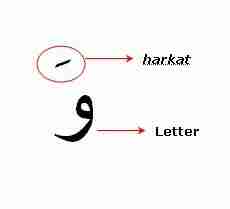
Tajweed can be improved by understanding the articulation of each letter in the Arabic alphabet, or how it must be pronounced correctly. This is known as its makhraj (literally, its place of exit from the mouth cavity)—the place from the throat, mouth, palate, or tongue (or their coordinated movements) that emits that particular letter's sound. This is of extreme importance.
The next step is to learn the sounds produced by the harakaat or "motions" that are marked above or below each letter. These harakaat bring the letters to life by elongating or shortening them in a certain way.
Finally, joining all the letters, along with their sounds, to pronounce the words of the Qur'an in a smooth, melodious flow results in the art of Qur'an recitation or tajweed.
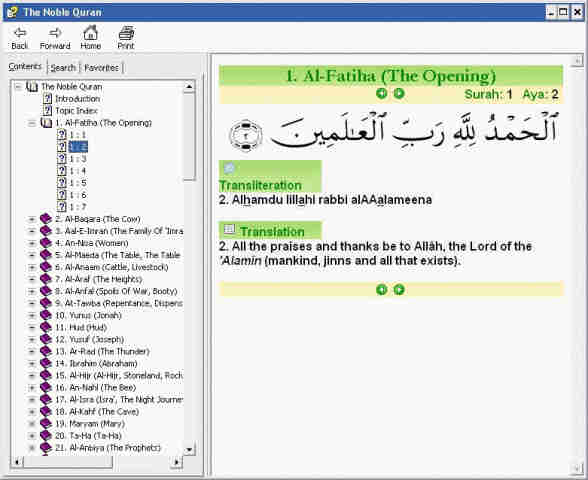
Learners who are not very familiar with the Arabic alphabet may benefit from transliteration tables available online; these enable English-speaking learners to pronounce each Arabic letter correctly. You can view a sample of this transliteration in the screenshot taken from The Noble Qur'an ebook below.
- The tried-and-tested self-tutorial method of learning tajweed:
While striving to learn tajweed, we must remember that the Qur'an was compiled into a physical book several years after it was revealed in full. Most early Muslims learned the Qur'anic verses by heart via the method of Ilqa. To date, this remains the most effective method of learning Qur'an recitation and memorization.
Ilqa means "to put into" in Arabic. In this method, a teacher speaks the words of the Qur'an properly,  then pauses as the students repeat those words exactly as pronounced. The teacher catches their mistakes or corrects them, asking them to pronounce the words again. Students thus learn through the constant repetition of listening closely and repeating.
When a non-Arabic speaker first starts striving to improve their tajweed (particularly recent converts to Islam), the initial sessions may leave their throat aching and tongue tired due to the focus required to pronounce letters properly. However, with constant daily practice, the vocal cords adapt to the new sounds.
This method can be simulated effectively today by dedicated, determined, and self-disciplined tajweed learners. They will need:- A copy of the Qur'an
- An audio tape, CD, DVD, software, or website that plays one verse of the Qur'an at a time
- A quiet place to learn without disturbances or distractions, such as a computer table
- Knowledge of how to perform Wudu (ablution)—the method of Muslim ritual purification—because the Qur'an should be recited in a state of purity
- Having the right attitude:
Of course, the ideal scenario is for a Qur'an teacher to personally tutor anyone wanting to improve their tajweed or learn recitation from scratch. Such tutors are available for private lessons for a fee or can be found at mosques, madrassahs, or Islamic centers offering regular, free tajweed lessons.
However, experience shows that no matter how good the teacher or how many classes a student  may attend, unless and until they are determined to put their knowledge of tajweed into practice by applying its rules during daily recitation—and correcting themselves as soon as they make a mistake—their attendance will be of little benefit. I have heard women complain, "I have been studying and learning tajweed at various Islamic organizations for the past five years, but my recitation has shown no improvement!" Their attitude often involves blaming the teachers for their lack of progress. When reciting the Qur'an, they reject their mistakes and take offense if a teacher points out errors. Such a defensive and narrow-minded attitude leads only to their own loss.
The ardent pursuer of Qur'anic recitation knows that this Book demands the very best from them. They approach it with humility, ready to accept and correct their mistakes. Effective tajweed practice entails catching errors immediately, returning to the start of the verse, and reciting it correctly, repeating the process until perfection is achieved. - Online resources and websites:
Today, following a self-help regimen for learning tajweed is much easier. Websites such as About Tajweed, Tajweed English, and the Islamweb tajweed section are excellent for learning rules and understanding do's and don'ts. Success ultimately depends on the student's discipline in practicing regularly. A daily 15–20 minute recitation session after the pre-dawn prayer of Fajr is ideal, as the house is quiet and the vocal cords and larynx are rested, facilitating clear articulation.
Surely the morning recitation is witnessed. [Qur'an - Surah Al-Israa: 78]
A tajweed practice session involves the following steps:- Turn on the audio player, software, or website that plays the Qur'an aloud.

- Keep the Qur'an open in your hands and focus on the words and letters recited by the teacher or Qari.
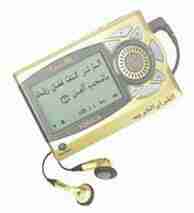 Most teachers recite one short verse at a time or break long verses into segments, repeating difficult portions and emphasizing elongated or stressed letters. Listen closely while following along with the text.
- Most tajweed software or digital Qur'an players are designed to allow manual pauses after each short verse or segment. When a pause occurs, try to repeat the words exactly as the teacher pronounced them. If the audio does not pause automatically, hit the pause button yourself and repeat what you heard.
- Later, practice the same verses independently without audio assistance. Catch and amend your own mistakes without being lenient with yourself.
Repeating these steps daily guarantees gradual improvement in tajweed. Some students experience astounding progress within just a few days because hard work always pays off. The more you practice, the faster you will improve. - Get a partner for your self-learning process:
Pairing up with a friend or fellow student to recite before each other at regular intervals helps both track progress and performance. A partner can catch overlooked errors and provide motivation, encouragement, and reassurance. - Listen to the Qur'an in Arabic as much as possible:
Listening to Qur'an recitation greatly enhances one's ability to recite and memorize verses. Doing so is easier than ever: you can download audio to your computer, notebook, cellphone, or iPod, or purchase a dedicated digital Qur'an player. You can play CDs while doing housework or in your car during commutes. The primary etiquette of listening to the Qur'an is remaining silent while it is recited.
And when the Quran is recited, then listen to it and remain silent, that mercy may be shown to you. [Qur'an - Surah Al-A'raaf: 204]
Find a reciter or Qari whose voice touches your heart and soothes your soul. There are numerous renowned Qurra (reciters) in the Muslim ummah, and preferences vary. Beginners often prefer Qari Ali Abd Al-Rahman Al-Huzaify of Madinah, known for a clear, deep, nasal voice and a slow, soothing recitation. To listen to his recitation of Surah Al-Fatiha, please click here (500 kb mp3).
Reciting the Qur'an offers numerous benefits, not least of which is the relief of stress, worry, fear, and anxiety. It is one of the quickest means of bonding with Allah [سبحانه وتعالى]. Prophet Muhammad [صلی اللہ علیہ وسلم] said: Whoever does not beautify the Quran (i.e., recite it melodiously), he is not of us. [Sahih Al-Bukhari]
Prophet Muhammad [صلی اللہ علیہ وسلم] also acknowledged that some Muslims, despite sincere and strenuous effort, might not be able to recite as beautifully as those blessed with greater innate talent. He encouraged them with the promise of a double reward:
Verily the one who recites the Qur'an beautifully, smoothly and precisely, he will be in the company of the noble and obedient angels. And as for the one who recites with difficulty, stammering and stumbling through its verses, then he will have twice that reward. [Sahihain: Al-Bukhari and Muslim]
To watch a young boy named Ahmed Saud recite Surah Al-Tur with English translation, watch the video below or click here to watch it on YouTube:
Sadaf Farooqi is a freelance writer who contributes regularly to the Islamic Family Magazine, Hiba. She can be contacted directly at [email protected].
Learn to recite the Qur'an
Now it's very easy to improve one's tajweed using recitation tapes and other online resources.
The Qur'an is Islam's Book of Divine Guidance. It is in Arabic and is the spoken word, or kalam, of Allah (God). It was revealed to Prophet Muhammad [صلی اللہ علیہ وسلم] via Archangel Jibrael [علیہ السلام] more than fourteen centuries ago. It contains laws and commands that govern how Muslims should live, both communally and individually. Unparalleled by any other book in the world, it has the unique honor of being memorized in its entirety by hundreds of thousands of Muslims—those who understand its Arabic, and also those who do not. Another distinguishing quality of this book is that its recitation is an act of worship, one that draws the reciter closer to Allah and earns them a multitude of rewards. It also exalts their status among Muslims.
Recite that which has been revealed to you of the Book and keep up prayer; surely prayer keeps (one) away from indecency and evil, and certainly the remembrance of Allah is the greatest, and Allah knows what you do. [Surah Al-Ankaboot: 45]
Many people are confused about how those who cannot speak or understand the Arabic language can learn to recite the Qur'an. Others do not comprehend how reciting something one does not understand can uplift a person spiritually. Because of these doubts and confusions, some Muslims have a laid-back attitude toward improving their recitation skills, or in other words, their tajweed.
Tajweed literally means "to beautify or adorn something." In Islamic terminology, it means the skill of reciting the Qur'an. Among Muslims of Southeast Asia, from where I hail, the sad plight of most Muslims' lack of recitation skills is caused by the similarity between Arabic and Urdu. Most Muslims in this region recite the Qur'an the way they speak Urdu—even some professional religious teachers and preachers! We should strive to recite the Qur'an the way it is supposed to be recited, observing all the rules of tajweed.
Those to whom We have given the Book recite it as it ought to be recited. These believe in it; and whoever disbelieves in it, these it is that are the losers. [Surah Al-Baqarah: 121]
If you want to learn how to recite the Qur'an with proper tajweed, please read on:
- Get to know the letters and their makhaarij or articulation:
Tajweed can be improved by understanding the articulation of each letter in the Arabic alphabet, or how it must be pronounced correctly. This is known as its makhraj (literally, its place of exit from the mouth cavity)—the place from the throat, mouth, palate, or tongue (or their coordinated movements) that emits that particular letter's sound. This is of extreme importance.
The next step is to learn the sounds produced by the harakaat or "motions" that are marked above or below each letter. These harakaat bring the letters to life by elongating or shortening them in a certain way.
Finally, joining all the letters, along with their sounds, to pronounce the words of the Qur'an in a smooth, melodious flow results in the art of Qur'an recitation or tajweed.
Learners who are not very familiar with the Arabic alphabet may benefit from transliteration tables available online; these enable English-speaking learners to pronounce each Arabic letter correctly. You can view a sample of this transliteration in the screenshot taken from The Noble Qur'an ebook below.
- The tried-and-tested self-tutorial method of learning tajweed:
While striving to learn tajweed, we must remember that the Qur'an was compiled into a physical book several years after it was revealed in full. Most early Muslims learned the Qur'anic verses by heart via the method of Ilqa. To date, this remains the most effective method of learning Qur'an recitation and memorization.
Ilqa means "to put into" in Arabic. In this method, a teacher speaks the words of the Qur'an properly, then pauses as the students repeat those words exactly as pronounced. The teacher catches their mistakes or corrects them, asking them to pronounce the words again. Students thus learn through the constant repetition of listening closely and repeating.
When a non-Arabic speaker first starts striving to improve their tajweed (particularly recent converts to Islam), the initial sessions may leave their throat aching and tongue tired due to the focus required to pronounce letters properly. However, with constant daily practice, the vocal cords adapt to the new sounds.
This method can be simulated effectively today by dedicated, determined, and self-disciplined tajweed learners. They will need:- A copy of the Qur'an
- An audio tape, CD, DVD, software, or website that plays one verse of the Qur'an at a time
- A quiet place to learn without disturbances or distractions, such as a computer table
- Knowledge of how to perform Wudu (ablution)—the method of Muslim ritual purification—because the Qur'an should be recited in a state of purity
- Having the right attitude:
Of course, the ideal scenario is for a Qur'an teacher to personally tutor anyone wanting to improve their tajweed or learn recitation from scratch. Such tutors are available for private lessons for a fee or can be found at mosques, madrassahs, or Islamic centers offering regular, free tajweed lessons.
However, experience shows that no matter how good the teacher or how many classes a student may attend, unless and until they are determined to put their knowledge of tajweed into practice by applying its rules during daily recitation—and correcting themselves as soon as they make a mistake—their attendance will be of little benefit. I have heard women complain, "I have been studying and learning tajweed at various Islamic organizations for the past five years, but my recitation has shown no improvement!" Their attitude often involves blaming the teachers for their lack of progress. When reciting the Qur'an, they reject their mistakes and take offense if a teacher points out errors. Such a defensive and narrow-minded attitude leads only to their own loss.
The ardent pursuer of Qur'anic recitation knows that this Book demands the very best from them. They approach it with humility, ready to accept and correct their mistakes. Effective tajweed practice entails catching errors immediately, returning to the start of the verse, and reciting it correctly, repeating the process until perfection is achieved. - Online resources and websites:
Today, following a self-help regimen for learning tajweed is much easier. Websites such as About Tajweed, Tajweed English, and the Islamweb tajweed section are excellent for learning rules and understanding do's and don'ts. Success ultimately depends on the student's discipline in practicing regularly. A daily 15–20 minute recitation session after the pre-dawn prayer of Fajr is ideal, as the house is quiet and the vocal cords and larynx are rested, facilitating clear articulation.
Surely the morning recitation is witnessed. [Qur'an - Surah Al-Israa: 78]
A tajweed practice session involves the following steps:- Turn on the audio player, software, or website that plays the Qur'an aloud.
- Keep the Qur'an open in your hands and focus on the words and letters recited by the teacher or Qari. Most teachers recite one short verse at a time or break long verses into segments, repeating difficult portions and emphasizing elongated or stressed letters. Listen closely while following along with the text.
- Most tajweed software or digital Qur'an players are designed to allow manual pauses after each short verse or segment. When a pause occurs, try to repeat the words exactly as the teacher pronounced them. If the audio does not pause automatically, hit the pause button yourself and repeat what you heard.
- Later, practice the same verses independently without audio assistance. Catch and amend your own mistakes without being lenient with yourself.
Repeating these steps daily guarantees gradual improvement in tajweed. Some students experience astounding progress within just a few days because hard work always pays off. The more you practice, the faster you will improve. - Get a partner for your self-learning process:
Pairing up with a friend or fellow student to recite before each other at regular intervals helps both track progress and performance. A partner can catch overlooked errors and provide motivation, encouragement, and reassurance. - Listen to the Qur'an in Arabic as much as possible:
Listening to Qur'an recitation greatly enhances one's ability to recite and memorize verses. Doing so is easier than ever: you can download audio to your computer, notebook, cellphone, or iPod, or purchase a dedicated digital Qur'an player. You can play CDs while doing housework or in your car during commutes. The primary etiquette of listening to the Qur'an is remaining silent while it is recited.
And when the Quran is recited, then listen to it and remain silent, that mercy may be shown to you. [Qur'an - Surah Al-A'raaf: 204]
Find a reciter or Qari whose voice touches your heart and soothes your soul. There are numerous renowned Qurra (reciters) in the Muslim ummah, and preferences vary. Beginners often prefer Qari Ali Abd Al-Rahman Al-Huzaify of Madinah, known for a clear, deep, nasal voice and a slow, soothing recitation. To listen to his recitation of Surah Al-Fatiha, please click here (500 kb mp3).
Reciting the Qur'an offers numerous benefits, not least of which is the relief of stress, worry, fear, and anxiety. It is one of the quickest means of bonding with Allah [سبحانه وتعالى]. Prophet Muhammad [صلی اللہ علیہ وسلم] said: Whoever does not beautify the Quran (i.e., recite it melodiously), he is not of us. [Sahih Al-Bukhari]
Prophet Muhammad [صلی اللہ علیہ وسلم] also acknowledged that some Muslims, despite sincere and strenuous effort, might not be able to recite as beautifully as those blessed with greater innate talent. He encouraged them with the promise of a double reward:
Verily the one who recites the Qur'an beautifully, smoothly and precisely, he will be in the company of the noble and obedient angels. And as for the one who recites with difficulty, stammering and stumbling through its verses, then he will have twice that reward. [Sahihain: Al-Bukhari and Muslim]
To watch a young boy named Ahmed Saud recite Surah Al-Tur with English translation, watch the video below or click here to watch it on YouTube:
Sadaf Farooqi is a freelance writer who contributes regularly to the Islamic Family Magazine, Hiba. She can be contacted directly at [email protected].
Learn to recite the Qur'an
By Howtodotips
Now it's very easy to improve one's tajweed using recitation tapes and other online resources.