When caring for kittens, ensure you feed them the best and most appropriate food for their developmental stage.
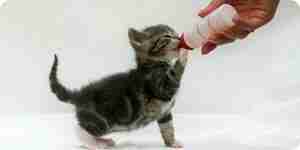
Feeding kittens is usually not challenging, unless they are unweaned. In that case, special measures are necessary to maintain good health because there isn't one best food that applies to all kittens.
Nutrition may mean something slightly different for each cat, but some general rules apply.
Feeding a weaned kitten:
- For weaned kittens, you should start by feeding any commercial dry food specially formulated for kittens. The food should be slightly moistened with water. Fresh water should also be offered at all times. The dry food should be moistened until your pet is about five to six months old. Do not moisten the food with milk. Cow's milk may give a cat or kitten diarrhea and is not healthy for them.
Some pet owners want to transition a cat to canned food. This should not be done until the cat is at least six months old. However, the canned food should still be supplemented with kitten chow until the cat is 12–18 months old. The kitten chow provides extra nutrients that are essential for a healthy adult cat. Also, dry food should still be offered even if the cat eats canned food.
- You can transition from kitten chow to adult dry food by mixing the two and gradually decreasing the amount of kitten chow until the pet is switched over completely to adult dry food.
Feeding an unweaned kitten:
- Feeding an unweaned kitten is a very different process. This usually involves the care of newborn kittens, where you must take over the mother's job. The first thing to do is take the kitten to a veterinarian for detailed care advice. Some vets keep a special kitten formula in the office, and this should be used if available. If not, many pet stores sell kitten formula. You should also get a small bottle—marked in cubic centimeters (CCs)—with a nipple specially designed for kittens.
- Kitten formula should be about room temperature for optimal feeding, and the kitten should receive about 8 CCs of formula per ounce of body weight per day. This should always be confirmed with a veterinarian. If the kitten is under three weeks old, it will need to be fed about every 2–3 hours. This means setting an alarm in the middle of the night. By the time it is three weeks old, feedings can be decreased to every six to eight hours.
- You can start weaning the kitten with a veterinarian's advice when it is about eight weeks old. It may take a week or two to get it completely weaned, but once the animal is eating moistened kitten food, the hardest part is over and you can relax and enjoy watching it grow up.
Feeding Kittens: Kitten Formula, Canned and Dry Cat Food
When caring for kittens, ensure you feed them the best and most appropriate food for their developmental stage.
Feeding kittens is usually not challenging, unless they are unweaned. In that case, special measures are necessary to maintain good health because there isn't one best food that applies to all kittens.
Nutrition may mean something slightly different for each cat, but some general rules apply.
Feeding a weaned kitten:
- For weaned kittens, you should start by feeding any commercial dry food specially formulated for kittens. The food should be slightly moistened with water. Fresh water should also be offered at all times. The dry food should be moistened until your pet is about five to six months old. Do not moisten the food with milk. Cow's milk may give a cat or kitten diarrhea and is not healthy for them.
Some pet owners want to transition a cat to canned food. This should not be done until the cat is at least six months old. However, the canned food should still be supplemented with kitten chow until the cat is 12–18 months old. The kitten chow provides extra nutrients that are essential for a healthy adult cat. Also, dry food should still be offered even if the cat eats canned food.
- You can transition from kitten chow to adult dry food by mixing the two and gradually decreasing the amount of kitten chow until the pet is switched over completely to adult dry food.
Feeding an unweaned kitten:
- Feeding an unweaned kitten is a very different process. This usually involves the care of newborn kittens, where you must take over the mother's job. The first thing to do is take the kitten to a veterinarian for detailed care advice. Some vets keep a special kitten formula in the office, and this should be used if available. If not, many pet stores sell kitten formula. You should also get a small bottle—marked in cubic centimeters (CCs)—with a nipple specially designed for kittens.
- Kitten formula should be about room temperature for optimal feeding, and the kitten should receive about 8 CCs of formula per ounce of body weight per day. This should always be confirmed with a veterinarian. If the kitten is under three weeks old, it will need to be fed about every 2–3 hours. This means setting an alarm in the middle of the night. By the time it is three weeks old, feedings can be decreased to every six to eight hours.
- You can start weaning the kitten with a veterinarian's advice when it is about eight weeks old. It may take a week or two to get it completely weaned, but once the animal is eating moistened kitten food, the hardest part is over and you can relax and enjoy watching it grow up.
Feeding Kittens: Kitten Formula, Canned and Dry Cat Food
By Howtodotips
When caring for kittens, ensure you feed them the best and most appropriate food for their developmental stage.