Learn how to properly trim a cedar hedge, including setting guideposts and string lines, trimming the base wider than the top, and keeping your tools sharp and safe.
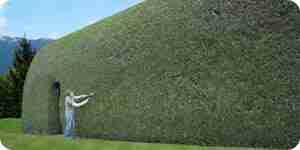
Cedar hedges are a nice way to shelter your young plants or provide your home with an ornamental privacy wall. But unlike any other tree species, cedars are adapted to extreme weather conditions like the winter chills and the summer drought. As a result, they can get out of control and become a mess if not trimmed the right way.
When trimming cedar hedges, the first thing that comes to mind is making them as perfectly straight as you can. With the right tools and a keen eye for a straight line, this should be really easy.
- The first thing to do is to determine your ideal size for the hedges. Take into consideration the space they would occupy and their manageability should they reach your preferred height.
- You may use rods or any straight wooden sticks to act as a guide. Make sure that the size of your rods or sticks matches your measurements, even if they are already in the soil. On one end of the hedge, stick a rod into the ground using a mallet, and do the same with the other end of the hedge. If your hedges are tightly packed, you can insert sticks in between, at equal distances. The rods or sticks should be strong enough to hold a tightly pulled string.
- Now that the guideposts are in place, you may start putting the strings at the top of your posts to guide you before trimming the hedge tops. Since cedars typically grow up to 30–40 meters in height, you may want to keep the height to a minimum, as it may just turn your fancy wall into a scary situation later. The strings should be pulled tightly between the posts to ensure a straight line.
- Don't let the next part fool you into making a straight top-to-bottom trim. When trimming your cedar hedge, attend to the sides first. Your goal is for the bottom of the hedge to still receive enough sunlight for photosynthesis. To do this, trim the hedge so that its base is a little wider than the upper body.
- Then work on the topmost portion of your cedar hedge by using sharp shears or electric hedge trimmers. Save your arms from the painful agony of having to manually shear an entire hectare of hedges, and instead use an electric hedge trimmer. The basic drill is to follow the guide you made earlier and make sure you don't cut the string with your trimmer. Work on the top in sweeping motions until you get to the end of the hedge.
For optimal results, make sure that your tools are in the best shape. Shears or electric hedge trimmers must be kept sharp and clean. Keep in mind too that, with the use of sharp tools, accidents may happen, so being careful wouldn't hurt, literally. Wearing proper gear like thick, long-sleeved shirts could also help in avoiding or minimizing skin irritation from bugs or other itchy residues of trimming.
Trim a cedar hedge
Learn how to properly trim a cedar hedge, including setting guideposts and string lines, trimming the base wider than the top, and keeping your tools sharp and safe.
Cedar hedges are a nice way to shelter your young plants or provide your home with an ornamental privacy wall. But unlike any other tree species, cedars are adapted to extreme weather conditions like the winter chills and the summer drought. As a result, they can get out of control and become a mess if not trimmed the right way.
When trimming cedar hedges, the first thing that comes to mind is making them as perfectly straight as you can. With the right tools and a keen eye for a straight line, this should be really easy.
- The first thing to do is to determine your ideal size for the hedges. Take into consideration the space they would occupy and their manageability should they reach your preferred height.
- You may use rods or any straight wooden sticks to act as a guide. Make sure that the size of your rods or sticks matches your measurements, even if they are already in the soil. On one end of the hedge, stick a rod into the ground using a mallet, and do the same with the other end of the hedge. If your hedges are tightly packed, you can insert sticks in between, at equal distances. The rods or sticks should be strong enough to hold a tightly pulled string.
- Now that the guideposts are in place, you may start putting the strings at the top of your posts to guide you before trimming the hedge tops. Since cedars typically grow up to 30–40 meters in height, you may want to keep the height to a minimum, as it may just turn your fancy wall into a scary situation later. The strings should be pulled tightly between the posts to ensure a straight line.
- Don't let the next part fool you into making a straight top-to-bottom trim. When trimming your cedar hedge, attend to the sides first. Your goal is for the bottom of the hedge to still receive enough sunlight for photosynthesis. To do this, trim the hedge so that its base is a little wider than the upper body.
- Then work on the topmost portion of your cedar hedge by using sharp shears or electric hedge trimmers. Save your arms from the painful agony of having to manually shear an entire hectare of hedges, and instead use an electric hedge trimmer. The basic drill is to follow the guide you made earlier and make sure you don't cut the string with your trimmer. Work on the top in sweeping motions until you get to the end of the hedge.
For optimal results, make sure that your tools are in the best shape. Shears or electric hedge trimmers must be kept sharp and clean. Keep in mind too that, with the use of sharp tools, accidents may happen, so being careful wouldn't hurt, literally. Wearing proper gear like thick, long-sleeved shirts could also help in avoiding or minimizing skin irritation from bugs or other itchy residues of trimming.
Trim a cedar hedge
By Howtodotips
Learn how to properly trim a cedar hedge, including setting guideposts and string lines, trimming the base wider than the top, and keeping your tools sharp and safe.