Solve common lawn problems easily.
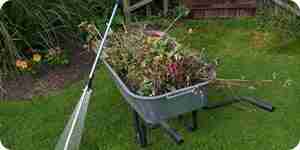
Chemical lawn care is a ruse, a marketing scheme. Grass, as all gardeners know, is a tenacious weed that needs little help to be healthy. But Americans weaken their lawns with unnecessary chemicals, harsh fertilizing salts, and improper cutting and watering, causing lawn problems.
Grow the right grass at the right height, and you will be amazed at how easy care of a great expanse of green can be. Here are some lawn care tips to help you and teach you how to care for your lawn without the help of any companies.
- Plant the right grass. Growing the right grass the right way depends on where you live.
- In the North, you want a cool-season grass. Always green over winter, it may go brown and dormant during a hot, dry spell in late summer, but it will quickly green up again when cool weather returns.
- In the South, go warm-season. Always green over summer, it may go brown and dormant during a winter cold snap, but it will green up again when the weather warms.
- In the Transition Zone in the middle of the country, choose cool- or warm-season grass depending on which spell of potential dormancy would bother you more, or mix similar-looking cool- and warm-season grasses to try to achieve a multi-grass lawn that is green all year.
- Plant at the right time of year. Planting grass depends on whether you live in a cool- or warm-season area, so the best time to plant grass seed varies.
- Cool-season grasses should only be sown in the fall—August 1–15 for the far North; August 15–30 for more moderate Northern climes. Cool-season seed sown in the spring will burn up when summer's heat fries the young growth.
- Warm-season grasses should be sown in the spring, as soon as the soil is warm enough to germinate the seed.
- If you cannot wait and must plant at the wrong time of year, lay sod instead. It is much more expensive than seed, but it does well pretty much anytime of the year if kept watered.
- Feed correctly. Lawn care and fertilization go hand in hand.
- Cool-season grasses should get their biggest feeding in the fall. Lawn fertilizers can consist of an inch of compost applied to the surface and raked in; this provides the perfect amount of food and improves the structure of the soil below. Feed again lightly in the spring; 10 to 20 pounds of corn gluten meal per thousand square feet of turf will prevent dormant weed seeds like crabgrass from germinating and provide a natural feeding. Be sure it is labeled as a natural pre-emergent weed and feed ("cattle feed" corn gluten will not work); apply it before local forsythia bushes reach peak bloom, or those weed seeds will have already germinated.
- Warm-season grasses should get three equal feedings in June, July, and August; an inch of compost or 10 pounds of corn gluten is ideal for each feeding.
- NOTE: Pre-emergents prevent the germination of ALL seeds. Do not use corn gluten when you seed a lawn.
- Cut at the right height. Lawn mowing is different throughout the country, and the height you need to cut will vary.
- Cool-season grasses in full sun, like the legendary Kentucky bluegrass, should be cut at two to three inches high. Shade-loving fescues should be cut at three to three and a half inches.
- Warm-season grasses thrive with a closer cut—around two inches for St. Augustine and Bermuda grass.
- NOTE: Those are the heights the lawn should be AFTER you are done cutting. Scalping a lawn lower sends it into shock and makes it vulnerable to pests, weeds, and disease, which makes weed control a nightmare. A high-cut lawn will look greener, grow slower, and resist stress better.
- Cut correctly. Replace your mower blade every season; it will not cost much more than getting it sharpened and will give you a much cleaner cut. Never remove more than a third of the lawn's height in any one mowing.
- Use a mulching mower. These specialized cutters have no discharge; their sealed decks and ultra-sharp blades cut and re-cut the clippings until they are returned to the lawn as a fine pulverized powder. Rich in grass-feeding nitrogen, those clippings provide half the food your grass needs in a season. AND MULCHING DOES NOT CAUSE THATCH! Thatch is caused by overuse of chemical fertilizers, not by returning natural nutrients to your lawn.
- Water wisely. Never water during the heat of the day or in the evening. The ideal time is early morning. Do not water in short spurts. Deliver a deep soaking when you water to encourage deep roots. Take special care when watering a new lawn.
- In the North, water when you have gone a week without an inch of rain. Deliver that inch in one long soaking, which should take several hours.
- In the South, your lawn will need two inches of water a week in summer. Supply whatever nature does not in long, inch-deep soakings.
Caring for a Lawn: Watering, Mowing, Weed Control, Fertilizers
Solve common lawn problems easily.
Chemical lawn care is a ruse, a marketing scheme. Grass, as all gardeners know, is a tenacious weed that needs little help to be healthy. But Americans weaken their lawns with unnecessary chemicals, harsh fertilizing salts, and improper cutting and watering, causing lawn problems.
Grow the right grass at the right height, and you will be amazed at how easy care of a great expanse of green can be. Here are some lawn care tips to help you and teach you how to care for your lawn without the help of any companies.
- Plant the right grass. Growing the right grass the right way depends on where you live.
- In the North, you want a cool-season grass. Always green over winter, it may go brown and dormant during a hot, dry spell in late summer, but it will quickly green up again when cool weather returns.
- In the South, go warm-season. Always green over summer, it may go brown and dormant during a winter cold snap, but it will green up again when the weather warms.
- In the Transition Zone in the middle of the country, choose cool- or warm-season grass depending on which spell of potential dormancy would bother you more, or mix similar-looking cool- and warm-season grasses to try to achieve a multi-grass lawn that is green all year.
- Plant at the right time of year. Planting grass depends on whether you live in a cool- or warm-season area, so the best time to plant grass seed varies.
- Cool-season grasses should only be sown in the fall—August 1–15 for the far North; August 15–30 for more moderate Northern climes. Cool-season seed sown in the spring will burn up when summer's heat fries the young growth.
- Warm-season grasses should be sown in the spring, as soon as the soil is warm enough to germinate the seed.
- If you cannot wait and must plant at the wrong time of year, lay sod instead. It is much more expensive than seed, but it does well pretty much anytime of the year if kept watered.
- Feed correctly. Lawn care and fertilization go hand in hand.
- Cool-season grasses should get their biggest feeding in the fall. Lawn fertilizers can consist of an inch of compost applied to the surface and raked in; this provides the perfect amount of food and improves the structure of the soil below. Feed again lightly in the spring; 10 to 20 pounds of corn gluten meal per thousand square feet of turf will prevent dormant weed seeds like crabgrass from germinating and provide a natural feeding. Be sure it is labeled as a natural pre-emergent weed and feed ("cattle feed" corn gluten will not work); apply it before local forsythia bushes reach peak bloom, or those weed seeds will have already germinated.
- Warm-season grasses should get three equal feedings in June, July, and August; an inch of compost or 10 pounds of corn gluten is ideal for each feeding.
- NOTE: Pre-emergents prevent the germination of ALL seeds. Do not use corn gluten when you seed a lawn.
- Cut at the right height. Lawn mowing is different throughout the country, and the height you need to cut will vary.
- Cool-season grasses in full sun, like the legendary Kentucky bluegrass, should be cut at two to three inches high. Shade-loving fescues should be cut at three to three and a half inches.
- Warm-season grasses thrive with a closer cut—around two inches for St. Augustine and Bermuda grass.
- NOTE: Those are the heights the lawn should be AFTER you are done cutting. Scalping a lawn lower sends it into shock and makes it vulnerable to pests, weeds, and disease, which makes weed control a nightmare. A high-cut lawn will look greener, grow slower, and resist stress better.
- Cut correctly. Replace your mower blade every season; it will not cost much more than getting it sharpened and will give you a much cleaner cut. Never remove more than a third of the lawn's height in any one mowing.
- Use a mulching mower. These specialized cutters have no discharge; their sealed decks and ultra-sharp blades cut and re-cut the clippings until they are returned to the lawn as a fine pulverized powder. Rich in grass-feeding nitrogen, those clippings provide half the food your grass needs in a season. AND MULCHING DOES NOT CAUSE THATCH! Thatch is caused by overuse of chemical fertilizers, not by returning natural nutrients to your lawn.
- Water wisely. Never water during the heat of the day or in the evening. The ideal time is early morning. Do not water in short spurts. Deliver a deep soaking when you water to encourage deep roots. Take special care when watering a new lawn.
- In the North, water when you have gone a week without an inch of rain. Deliver that inch in one long soaking, which should take several hours.
- In the South, your lawn will need two inches of water a week in summer. Supply whatever nature does not in long, inch-deep soakings.
Caring for a Lawn: Watering, Mowing, Weed Control, Fertilizers
By Howtodotips
Solve common lawn problems easily.