A comprehensive, week-by-week guide for raising healthy baby goats, covering colostrum, feeding, vaccinations, dehorning, deworming, and housing.
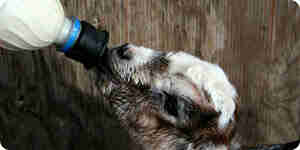
Baby goats, or kids, require extra care and attention just like any newborn, and owners must provide it to maintain a healthy, productive herd. These young goats will need colostrum, milk, water, hay, grain, health care, shelter, vaccinations, hoof trimming, and tattooing. Following a schedule is essential when providing for these needs. Prospective, new, and even experienced owners may find the following schedule helpful when raising baby goats:
- From birth to day 2, baby goats must nurse from their mother, or doe, to receive vitally important colostrum. Colostrum is available from the nursing doe immediately after birth and remains available for the following 24 hours, after which the doe will begin producing regular milk. Colostrum is low in fat and high in carbohydrates, protein, nutrients, and antibodies. During this time, the owner should dip the newborn's umbilical cord in 7% iodine to prevent infection. The newborn goats and their mother should also be provided with a shelter that protects them from the weather and predators. They will remain in this shelter until week 2.
- From day 2 through week 1, kids will be dehorned, vaccinated, and will usually begin eating grain alongside their mother. Dehorning can occur as soon as the owner feels the beginning of the horns, called nubs, when rubbing the top of the baby's head. The kid will also receive a vaccination with Probios during this time to jump-start its digestive system. Probios adds beneficial bacteria to the young goat's rumen, or stomach. Because the kid will likely begin eating grain, the owner will need to increase the amount of grain fed to the nursing doe.
- During week 2, the owner will provide the baby goat and its mother with free-choice hay and water, and will allow them to move from the shelter to the pasture during the daytime with the rest of the herd. At night, the kid and its mother are returned to the shelter, which consists of a fenced area with a partially walled and roofed section. Fencing this shelter protects the goats from bad weather as well as predators. Bedding, usually hay or shavings, should be included in the enclosed area of the shelter and must be kept clean and dry.
- During week 3, the owner gives the baby its first dose of 12.5% Albon Concentrated Solution orally to prevent coccidiosis. This preventative medication is given over the course of 5 days. On day one, the baby is given 1 ml per 5 pounds of body weight, followed by a dose of 1 ml per 10 pounds of body weight on days 2 through 5. Also during this week, any bucks not being kept for breeding purposes can be castrated. The owner should continue feeding grain and providing fresh, clean hay and water. The goats should still be allowed outside during the day and brought back to the shelter at night.
- Week 4 is one of the busier weeks for an owner because the baby goats will receive a CD&T vaccination, have their hooves trimmed, and be dewormed. The kid will receive its first dose of CD&T (Clostridium perfringens types C & D plus tetanus toxoid), given to prevent overeating disease and tetanus. This vaccination—a 2 ml subcutaneous injection—is given during week 4 to baby goats whose mothers were not vaccinated a month prior to giving birth. The goats will continue to be fed, watered, and moved out to pasture during the day and returned to the shelter at night.
- During week 6, the owner gives the kids their second dose of the CD&T vaccination, another 2 ml subcutaneous injection. Examine any previously castrated bucks for signs of failed castration, such as descending testicles, and re-castrate if needed. The owner should continue feeding, watering, and providing shelter as in the previous week.
- Week 8 is the time to separate doe kids from uncastrated buck kids, as well as to adjust their feeding routine. Feed should be increased to 3 cups per day per goat. Hay should be fed twice a day during the winter and once per day during the summer. Deworming the baby goats takes place during this time, along with trimming their hooves if they are getting long. Tattooing should also occur now, if the owner so desires. As in previous weeks, the owner will continue providing free-choice pasture and water, along with shelter at night.
- During week 9, give the baby goat another dose of 12.5% Albon Concentrated Solution, and repeat every 6 weeks thereafter. The kids should now be on the same schedule as the rest of the goat herd, with the exception of moving them to shelter at night if the entire herd is not housed.
Owners who follow this schedule should raise healthy baby goats that will grow up to be thriving adults.
Care for and Feed Baby Goats
A comprehensive, week-by-week guide for raising healthy baby goats, covering colostrum, feeding, vaccinations, dehorning, deworming, and housing.
Baby goats, or kids, require extra care and attention just like any newborn, and owners must provide it to maintain a healthy, productive herd. These young goats will need colostrum, milk, water, hay, grain, health care, shelter, vaccinations, hoof trimming, and tattooing. Following a schedule is essential when providing for these needs. Prospective, new, and even experienced owners may find the following schedule helpful when raising baby goats:
- From birth to day 2, baby goats must nurse from their mother, or doe, to receive vitally important colostrum. Colostrum is available from the nursing doe immediately after birth and remains available for the following 24 hours, after which the doe will begin producing regular milk. Colostrum is low in fat and high in carbohydrates, protein, nutrients, and antibodies. During this time, the owner should dip the newborn's umbilical cord in 7% iodine to prevent infection. The newborn goats and their mother should also be provided with a shelter that protects them from the weather and predators. They will remain in this shelter until week 2.
- From day 2 through week 1, kids will be dehorned, vaccinated, and will usually begin eating grain alongside their mother. Dehorning can occur as soon as the owner feels the beginning of the horns, called nubs, when rubbing the top of the baby's head. The kid will also receive a vaccination with Probios during this time to jump-start its digestive system. Probios adds beneficial bacteria to the young goat's rumen, or stomach. Because the kid will likely begin eating grain, the owner will need to increase the amount of grain fed to the nursing doe.
- During week 2, the owner will provide the baby goat and its mother with free-choice hay and water, and will allow them to move from the shelter to the pasture during the daytime with the rest of the herd. At night, the kid and its mother are returned to the shelter, which consists of a fenced area with a partially walled and roofed section. Fencing this shelter protects the goats from bad weather as well as predators. Bedding, usually hay or shavings, should be included in the enclosed area of the shelter and must be kept clean and dry.
- During week 3, the owner gives the baby its first dose of 12.5% Albon Concentrated Solution orally to prevent coccidiosis. This preventative medication is given over the course of 5 days. On day one, the baby is given 1 ml per 5 pounds of body weight, followed by a dose of 1 ml per 10 pounds of body weight on days 2 through 5. Also during this week, any bucks not being kept for breeding purposes can be castrated. The owner should continue feeding grain and providing fresh, clean hay and water. The goats should still be allowed outside during the day and brought back to the shelter at night.
- Week 4 is one of the busier weeks for an owner because the baby goats will receive a CD&T vaccination, have their hooves trimmed, and be dewormed. The kid will receive its first dose of CD&T (Clostridium perfringens types C & D plus tetanus toxoid), given to prevent overeating disease and tetanus. This vaccination—a 2 ml subcutaneous injection—is given during week 4 to baby goats whose mothers were not vaccinated a month prior to giving birth. The goats will continue to be fed, watered, and moved out to pasture during the day and returned to the shelter at night.
- During week 6, the owner gives the kids their second dose of the CD&T vaccination, another 2 ml subcutaneous injection. Examine any previously castrated bucks for signs of failed castration, such as descending testicles, and re-castrate if needed. The owner should continue feeding, watering, and providing shelter as in the previous week.
- Week 8 is the time to separate doe kids from uncastrated buck kids, as well as to adjust their feeding routine. Feed should be increased to 3 cups per day per goat. Hay should be fed twice a day during the winter and once per day during the summer. Deworming the baby goats takes place during this time, along with trimming their hooves if they are getting long. Tattooing should also occur now, if the owner so desires. As in previous weeks, the owner will continue providing free-choice pasture and water, along with shelter at night.
- During week 9, give the baby goat another dose of 12.5% Albon Concentrated Solution, and repeat every 6 weeks thereafter. The kids should now be on the same schedule as the rest of the goat herd, with the exception of moving them to shelter at night if the entire herd is not housed.
Owners who follow this schedule should raise healthy baby goats that will grow up to be thriving adults.
Care for and Feed Baby Goats
By Howtodotips
A comprehensive, week-by-week guide for raising healthy baby goats, covering colostrum, feeding, vaccinations, dehorning, deworming, and housing.