Learn how to treat a burn quickly and effectively!
Whether you burn yourself on a hot curling iron or your child reaches for a hot stove, burns are painful and often scary. There are many misconceptions and old wives' tales about how to treat burns, but following these steps can help you make a full recovery.
To treat a burn:
Immediately run the burn under cool water. If you burn your finger or your wrist, this is easy to do in the sink. If, however, the burn is on a less convenient part of your body, immerse that part of your body in a cool bath or wrap it in wet towels. With children who are in pain and scared, it is often easier to pick them up and put them in a cool bath, clothes and all, than it is to try to convince them to go to the sink and stand still.
Quickly assess the degree of the burn. A rule of thumb is that first-degree burns are red, second-degree burns blister, and third-degree burns break or blacken the skin. Third-degree burns need immediate emergency medical care!
Seek medical attention if needed. If you or someone else has a third-degree burn, call 911. Also seek immediate emergency medical attention if the burn is electrical, chemical, or on the genitals or face. If it is a second-degree burn that covers an area larger than the palm of your hand, go to the emergency room.
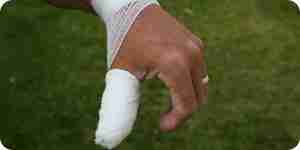
Bandage the burned area. With the exception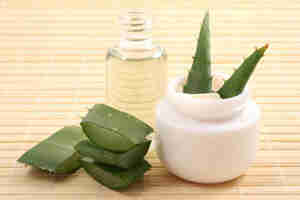 of the situations above, apply a sterile gauze bandage or dressing to the area to protect it. Do not use adhesive when treating a burn - you won't want to peel that off burned skin - and keep the bandage loose to allow air to circulate.
Do not apply ice. Ice and ice water might feel good but they can damage the skin even further.
Do not apply antibiotic creams or butter. We've all heard that butter can be used to treat burns, but this can actually cause infection and seal in heat.
Apply aloe. Aloe-based creams and gels can be used to treat burns and relieve pain.
Take pain relievers. Aspirin, ibuprofen, and acetaminophen can be used to help with the pain, although aspirin should not be used by children.
Do not pop blisters. Opening up blisters or picking at burned skin allows it to become infected.
Pay attention to healing. If there are any signs of infection in the burned area, or if pain continues after a few days, see your doctor.
It is also important to prevent burns whenever possible - do not leave irons or curling irons on, be careful with boiling water and steam, and keep children away from hot stoves! It is always better to prevent burns than to treat them!
How to Treat Burns
Learn how to treat a burn quickly and effectively!
Whether you burn yourself on a hot curling iron or your child reaches for a hot stove, burns are painful and often scary. There are many misconceptions and old wives' tales about how to treat burns, but following these steps can help you make a full recovery.
To treat a burn:
Immediately run the burn under cool water. If you burn your finger or your wrist, this is easy to do in the sink. If, however, the burn is on a less convenient part of your body, immerse that part of your body in a cool bath or wrap it in wet towels. With children who are in pain and scared, it is often easier to pick them up and put them in a cool bath, clothes and all, than it is to try to convince them to go to the sink and stand still.
Quickly assess the degree of the burn. A rule of thumb is that first-degree burns are red, second-degree burns blister, and third-degree burns break or blacken the skin. Third-degree burns need immediate emergency medical care!
Seek medical attention if needed. If you or someone else has a third-degree burn, call 911. Also seek immediate emergency medical attention if the burn is electrical, chemical, or on the genitals or face. If it is a second-degree burn that covers an area larger than the palm of your hand, go to the emergency room.
Bandage the burned area. With the exception of the situations above, apply a sterile gauze bandage or dressing to the area to protect it. Do not use adhesive when treating a burn - you won't want to peel that off burned skin - and keep the bandage loose to allow air to circulate.
Do not apply ice. Ice and ice water might feel good but they can damage the skin even further.
Do not apply antibiotic creams or butter. We've all heard that butter can be used to treat burns, but this can actually cause infection and seal in heat.
Apply aloe. Aloe-based creams and gels can be used to treat burns and relieve pain.
Take pain relievers. Aspirin, ibuprofen, and acetaminophen can be used to help with the pain, although aspirin should not be used by children.
Do not pop blisters. Opening up blisters or picking at burned skin allows it to become infected.
Pay attention to healing. If there are any signs of infection in the burned area, or if pain continues after a few days, see your doctor.
It is also important to prevent burns whenever possible - do not leave irons or curling irons on, be careful with boiling water and steam, and keep children away from hot stoves! It is always better to prevent burns than to treat them!
How to Treat Burns
By Howtodotips
Learn how to treat a burn quickly and effectively!