Cross-curricular activities
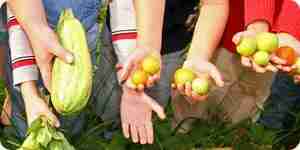
Gardening with children is a perfect hands-on, multi-sensory activity. Gardening and plant care can be a stand-alone curriculum if you incorporate it into each content area. The following guidelines will help you incorporate a gardening unit or project into every aspect of your kindergarten or first grade curriculum.
- Language Arts
- Vocabulary: Use word cards or sticky notes to label every aspect of your gardening and plants.
- Label plants growing in your garden (carrot, corn, beans, etc.).
- Label different parts of a plant: stem, roots, leaves.
- Label the parts of your garden (use a bulletin board display if necessary): soil, sun, rain, worms, plants, buds, bugs, butterflies, etc.
- Label gardening equipment: hoe, rake, watering can, hat, etc.
- Label plants, fruits, and vegetables. Include color and number words (four red apples).
- Label weather words.
- Phonics
- Make word walls from gardening words.
- Use words with common short vowel and consonant blend phoneme patterns for kindergarten (hat, sun, bug, stem).
- Use words with common long vowel, digraph, and diphthong patterns for first grade (rake, hoe, bean, seed, root, etc.).
- Extend each word into a word family list (rake, bake, make, take, stake, lake).
- Spelling
- Practice one word family per week. Include one rule breaker each week (water, worm).
- Make up a simple song to remember word family words.
- Color-code word family patterns (initial consonant-blue, short vowel-orange, long vowel-red).
- Writing and Reading: Each student should:
- Journal about gardening activities.
- Dictate a sentence or paragraph to the teacher.
- Use vocabulary words.
- Copy what the teacher has written.
- Do an ELA (elicited language sample) on the board together. The teacher writes what the students say. Students copy it into a book.
- Read what they have written to each other.
- Illustrate journal entries.
- Keep a word bank of new words from the week.
- Literature: There are many books about gardening in children's literature. Here are some of my favorites:
- The Carrot Seed
- The Popcorn Book
- The Gardener
- A Tree is Nice
- The Giving Tree
- A Year at Maple Tree Farm
- The Little Red Hen
- Ox-Cart Man
- The Legend of Johnny Appleseed
- The Beetle Bush
- A Pocketful of Cricket
- Blueberries for Sal
- Math and Science
- Count seeds.
- Divide seeds according to how many will be needed for each plant.
- Measure plant growth.
- Estimate which seeds will sprout first, how big a pumpkin will get, how many tomatoes will grow, etc.
- Graph plant growth.
- Make a weather station (see links for samples).
- Gauge rainfall.
- Measure temperature.
- Measure wind speed with an anemometer.
- Record barometric pressure.
- Chart and graph weather, wind speed, temperature, and barometer readings.
- Track plant progress and keep a calendar of gardening events (planting, harvesting, weeding, heavy rainstorm, etc.). You can add these to your regular calendar routine.
- Check the links attached for free math and science printables based on gardening.
- Art, Drama, and Music
- Check the link for plant and gardening songs.
- Choose a story from the literature list to act out.
- Dramatize a plant growing.
- Explore the work of famous artists who specialized in plant and garden themes. Claude Monet, Auguste Renoir, Diego Rivera, Paul Gauguin, and Vincent van Gogh are good places to begin.
- Social Studies
- Map where different plants are found.
- Explore which biomes produce which kinds of plants.
- Use the five senses to explore different kinds of plants.
Incorporate Gardening into Kindergarten and First Grade Curriculum
Cross-curricular activities
Gardening with children is a perfect hands-on, multi-sensory activity. Gardening and plant care can be a stand-alone curriculum if you incorporate it into each content area. The following guidelines will help you incorporate a gardening unit or project into every aspect of your kindergarten or first grade curriculum.
- Language Arts
- Vocabulary: Use word cards or sticky notes to label every aspect of your gardening and plants.
- Label plants growing in your garden (carrot, corn, beans, etc.).
- Label different parts of a plant: stem, roots, leaves.
- Label the parts of your garden (use a bulletin board display if necessary): soil, sun, rain, worms, plants, buds, bugs, butterflies, etc.
- Label gardening equipment: hoe, rake, watering can, hat, etc.
- Label plants, fruits, and vegetables. Include color and number words (four red apples).
- Label weather words.
- Phonics
- Make word walls from gardening words.
- Use words with common short vowel and consonant blend phoneme patterns for kindergarten (hat, sun, bug, stem).
- Use words with common long vowel, digraph, and diphthong patterns for first grade (rake, hoe, bean, seed, root, etc.).
- Extend each word into a word family list (rake, bake, make, take, stake, lake).
- Spelling
- Practice one word family per week. Include one rule breaker each week (water, worm).
- Make up a simple song to remember word family words.
- Color-code word family patterns (initial consonant-blue, short vowel-orange, long vowel-red).
- Writing and Reading: Each student should:
- Journal about gardening activities.
- Dictate a sentence or paragraph to the teacher.
- Use vocabulary words.
- Copy what the teacher has written.
- Do an ELA (elicited language sample) on the board together. The teacher writes what the students say. Students copy it into a book.
- Read what they have written to each other.
- Illustrate journal entries.
- Keep a word bank of new words from the week.
- Literature: There are many books about gardening in children's literature. Here are some of my favorites:
- The Carrot Seed
- The Popcorn Book
- The Gardener
- A Tree is Nice
- The Giving Tree
- A Year at Maple Tree Farm
- The Little Red Hen
- Ox-Cart Man
- The Legend of Johnny Appleseed
- The Beetle Bush
- A Pocketful of Cricket
- Blueberries for Sal
- Math and Science
- Count seeds.
- Divide seeds according to how many will be needed for each plant.
- Measure plant growth.
- Estimate which seeds will sprout first, how big a pumpkin will get, how many tomatoes will grow, etc.
- Graph plant growth.
- Make a weather station (see links for samples).
- Gauge rainfall.
- Measure temperature.
- Measure wind speed with an anemometer.
- Record barometric pressure.
- Chart and graph weather, wind speed, temperature, and barometer readings.
- Track plant progress and keep a calendar of gardening events (planting, harvesting, weeding, heavy rainstorm, etc.). You can add these to your regular calendar routine.
- Check the links attached for free math and science printables based on gardening.
- Art, Drama, and Music
- Check the link for plant and gardening songs.
- Choose a story from the literature list to act out.
- Dramatize a plant growing.
- Explore the work of famous artists who specialized in plant and garden themes. Claude Monet, Auguste Renoir, Diego Rivera, Paul Gauguin, and Vincent van Gogh are good places to begin.
- Social Studies
- Map where different plants are found.
- Explore which biomes produce which kinds of plants.
- Use the five senses to explore different kinds of plants.
Incorporate Gardening into Kindergarten and First Grade Curriculum
By Howtodotips
Cross-curricular activities