Learn how to master the volleyball float serve to put your opponents at a disadvantage and gain the upper hand in every rally.
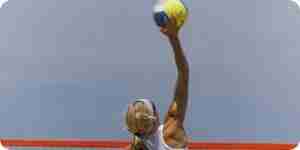
Every rally in volleyball begins with the serve, making it a crucial skill to learn. The serve puts the ball into play and can give your team an immediate advantage. How effectively you serve determines whether you can pressure your opponents and win the rally. Once developed, float serves can make it extremely difficult for opponents to pass and run an effective offense. Serving should be seen as an opportunity to put your opponents at a disadvantage—a volleyball skill that should never be taken for granted.
The Float Serve
- Stand in a ready position. Stand comfortably in a staggered stance with the foot of your non-hitting hand slightly in front. (If you are right-handed, your left foot should be in front.)
- Toss the ball and take a small step. The toss is the most critical part of the serve. If you are right-handed, the toss comes from your left hand.
First, stand with your arm bent a comfortable distance away from your body, lined up with your hitting shoulder.
Hold the ball up to shoulder level. If you can develop a consistent toss, your hitting motion will always be the same, allowing you to build serving accuracy.
Moving your entire arm, toss the ball 12 to 18 inches high. You will need to figure out what height works best for you. If your toss is too high, you will have to slow down your arm swing and will likely lose power and momentum. If your toss is too low, you will likely have to rush your arm swing, which can cause control problems. - Draw back the elbow. Before the toss, you may rest your hitting hand on top of the ball. When you toss, bend your elbow and draw your arm back (often referred to as a bow-and-arrow draw-back). As you toss and draw back, keep your weight on your back foot.
- Make contact. As you swing through to contact the ball, shift your weight forward, perhaps taking a small step. When the serve is complete, all your weight should be on your front foot.
You want to contact the ball with the center of your hand, which is key to serving a good floater.
Try to serve the ball so it does not spin. A ball without spin is much more likely to float, or "dance in the air," making it tough for opponents to pass. This erratic movement is often referred to as a "knuckleball effect."
Dennis Jackson invites you to visit http://www.strength-and-power-for-volleyball.com/ for additional volleyball advice.
How to Serve a Volleyball
Learn how to master the volleyball float serve to put your opponents at a disadvantage and gain the upper hand in every rally.
Every rally in volleyball begins with the serve, making it a crucial skill to learn. The serve puts the ball into play and can give your team an immediate advantage. How effectively you serve determines whether you can pressure your opponents and win the rally. Once developed, float serves can make it extremely difficult for opponents to pass and run an effective offense. Serving should be seen as an opportunity to put your opponents at a disadvantage—a volleyball skill that should never be taken for granted.
The Float Serve
- Stand in a ready position. Stand comfortably in a staggered stance with the foot of your non-hitting hand slightly in front. (If you are right-handed, your left foot should be in front.)
- Toss the ball and take a small step. The toss is the most critical part of the serve. If you are right-handed, the toss comes from your left hand.
First, stand with your arm bent a comfortable distance away from your body, lined up with your hitting shoulder.
Hold the ball up to shoulder level. If you can develop a consistent toss, your hitting motion will always be the same, allowing you to build serving accuracy.
Moving your entire arm, toss the ball 12 to 18 inches high. You will need to figure out what height works best for you. If your toss is too high, you will have to slow down your arm swing and will likely lose power and momentum. If your toss is too low, you will likely have to rush your arm swing, which can cause control problems. - Draw back the elbow. Before the toss, you may rest your hitting hand on top of the ball. When you toss, bend your elbow and draw your arm back (often referred to as a bow-and-arrow draw-back). As you toss and draw back, keep your weight on your back foot.
- Make contact. As you swing through to contact the ball, shift your weight forward, perhaps taking a small step. When the serve is complete, all your weight should be on your front foot.
You want to contact the ball with the center of your hand, which is key to serving a good floater.
Try to serve the ball so it does not spin. A ball without spin is much more likely to float, or "dance in the air," making it tough for opponents to pass. This erratic movement is often referred to as a "knuckleball effect."
Dennis Jackson invites you to visit http://www.strength-and-power-for-volleyball.com/ for additional volleyball advice.
How to Serve a Volleyball
By Howtodotips
Learn how to master the volleyball float serve to put your opponents at a disadvantage and gain the upper hand in every rally.